
I don’t know if you’ve noticed, but there’s a lot going on currently in the world of forest protection. The European Union Deforestation Regulation has been adopted and is in force, a top executive from European Central Bank has flagged the stark economic risk of losing forest biodiversity, and here in Australia Victoria and Western Australia have committed to end native forest logging in 2024, and a new nature repair market bill is being developed to help further incentivise the recovery of forests.
Its interesting then to see what trends are circulating at one of the worlds top forest conferences. Held in Cairns recently, The Forest Treasure Chest is the Forest Products conference of the International Union for Forest Research Organisation (IUFRO, Division 5). Here are 5 take homes:
For me, the key messages from the Forest Treasure Chest conference were: sustainability, carbon storage and wood durability; securing timber supply free from illegal logging and deforestation; traditional use and indigenous communities; increasing focus on working with native species; and Improvements in tree selection and product manufacturing.
So lets take look at each of these in more detail.

Sustainability, carbon storage and wood durability
Wood is the ultimate sustainable product. Its renewable, durable and directly fixes carbon. And in terms of sustainability, there are massive opportunities to increase carbon sequestration alongside forest production and extend the durability of products to protect carbon.
We saw a number of talks on this topic across the conference including sessions on Plantations Meet Carbon Reduction, Future Pathways to Forests, Business and Sustainability and a plenary on wood durability and protection by Marie-France Thevenon. The idea of sustainability and promotion of wood products along side carbon sequestration strategies is clearly a strong opportunity for the sector.
Securing timber supply free from illegal logging and deforestation
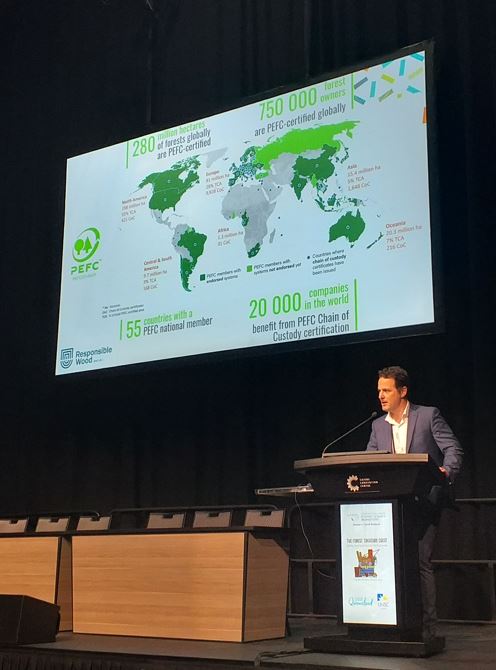
An overview of forest certification and verification systems to support the sustainable, legal and nature positive production of wood products was presented in a plenary by Matt de Jong from Responsible Wood.
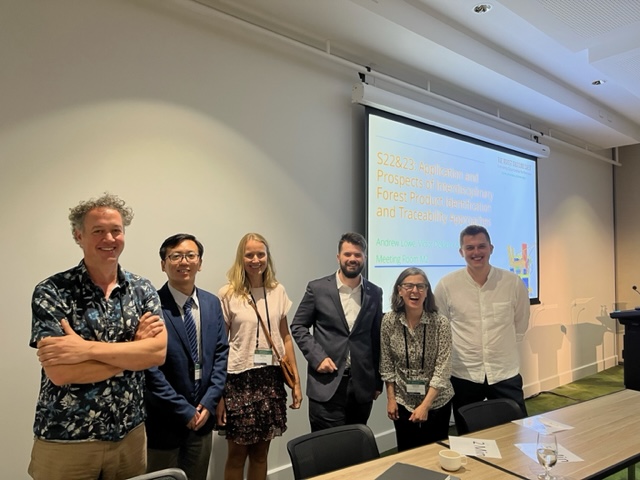
We saw presentations on exciting developments in the field of scientific methods to verify the species and origin of wood. Wood anatomy methods have been combined with machine learning to provide advanced computer vision wood identification and these methods are being extended through the use of high-resolution sub-µCt based volumetric analysis (Volker Haag). This method is especially valuable when the wood fragments are particularly small and chemically or thermally treated. Today, a large part of the raw wood is processed in the form of chips and particles in wood products such as chipboard, OSB or MDF. For µCT (and in some cases nano-CT) examinations of timber, wood species are identified in fragments of only 1 cubic millimetre of wood.
The application of other scientific techniques to provide species, geographic and even individual level identification (stable isotopes, genomics and elemental profiling) were also profiled at the conference. Some recent work includes the development of stable isotope profiles to confirm the geographic origin of timber from the Amazonian rainforest and Europe (Charlie Watkinson), the application of genomics to provide a species level identification tool to the taxonomically complex group of meranti from Borneo (Melita Low), use of ancient DNA to confirm the species and region of origin of timbers used in the Forbidden City (Lichao Jiao), the development of GCxGC-TOFMS-based metabolomic profiling for forensic identification of mahogany and rosewood species (Isabelle Duchesne). All are promising techniques, and provide a broad arsenal of rigorous scientific testing methods to verify the species and region of origin of timber to help detect and ultimately stop illegal logging.
There were also very promising developments to provide international reference data that can be accessed by verification authorities, researchers and industry. The development of networks of xylaria (Listya Dewi) and progress towards digitising wood collections (Yafang Yin) were also presented. But perhaps one of the most exciting initiatives is the progress of World Forest ID (Victor Deklerck), which emerged from a consortium of partners which included the US Forest Service, World Resources Institute (WRI), Royal Botanical Gardens, Kew, and the Forest Stewardship Council (FSC). World Forest ID aims to provide a robust and authoritative set of global reference collections, reference data for multiple scientific methods (isotopes, genomics, metabolites, and elemental profiling), and data analysis and interpretation tools that enable effective enforcement of timber trade regulations. As of April 2023, World Forest ID has collected over 23,000 wood samples (>9,000 trees, >60 countries and >350 species).
Traditional use and indigenous communities
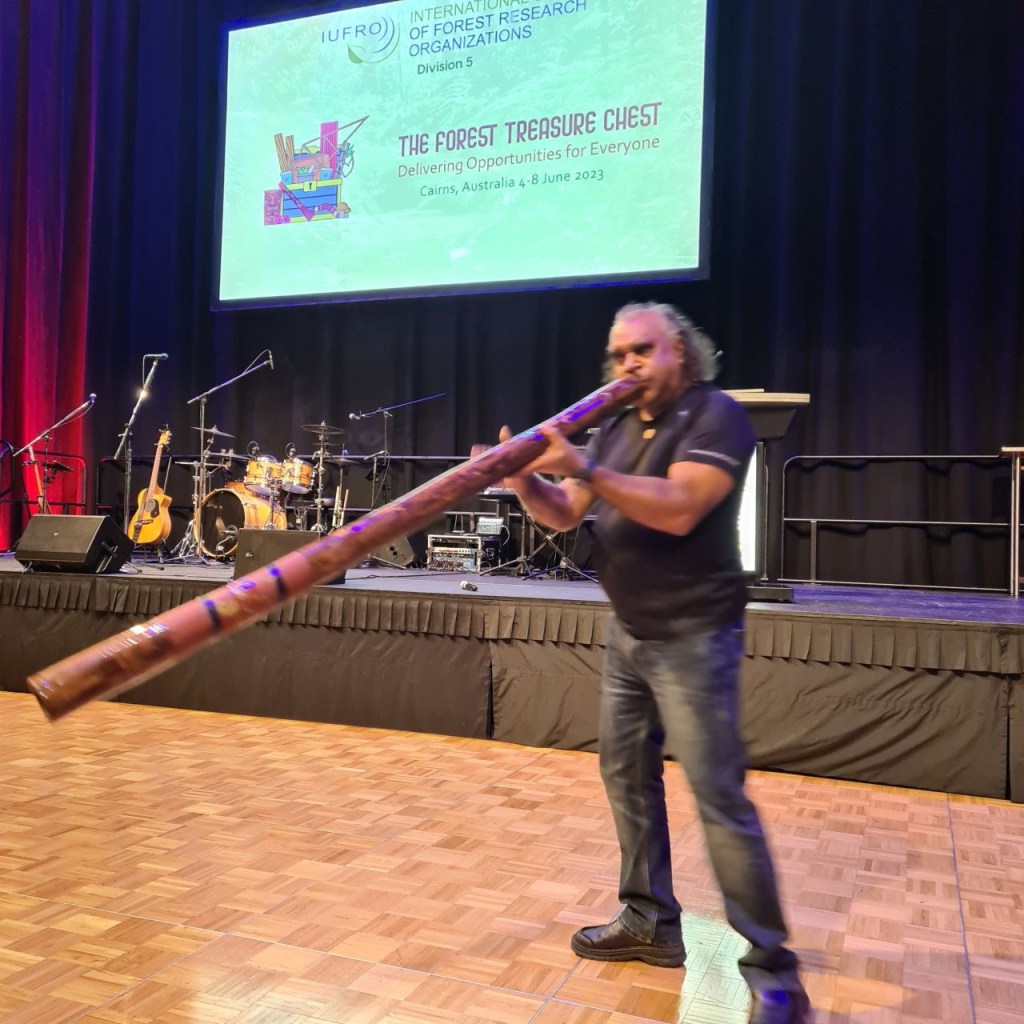
It was interesting to see so many talks on the value of forests to indigenous communities and how this can be incorporated into ongoing forest management and sustainable production systems. Talks included perspectives from Australia (David Hudson), India and strong presentations from North America particularly a Canadian Inuit perspective.
Increasing focus on working with native species
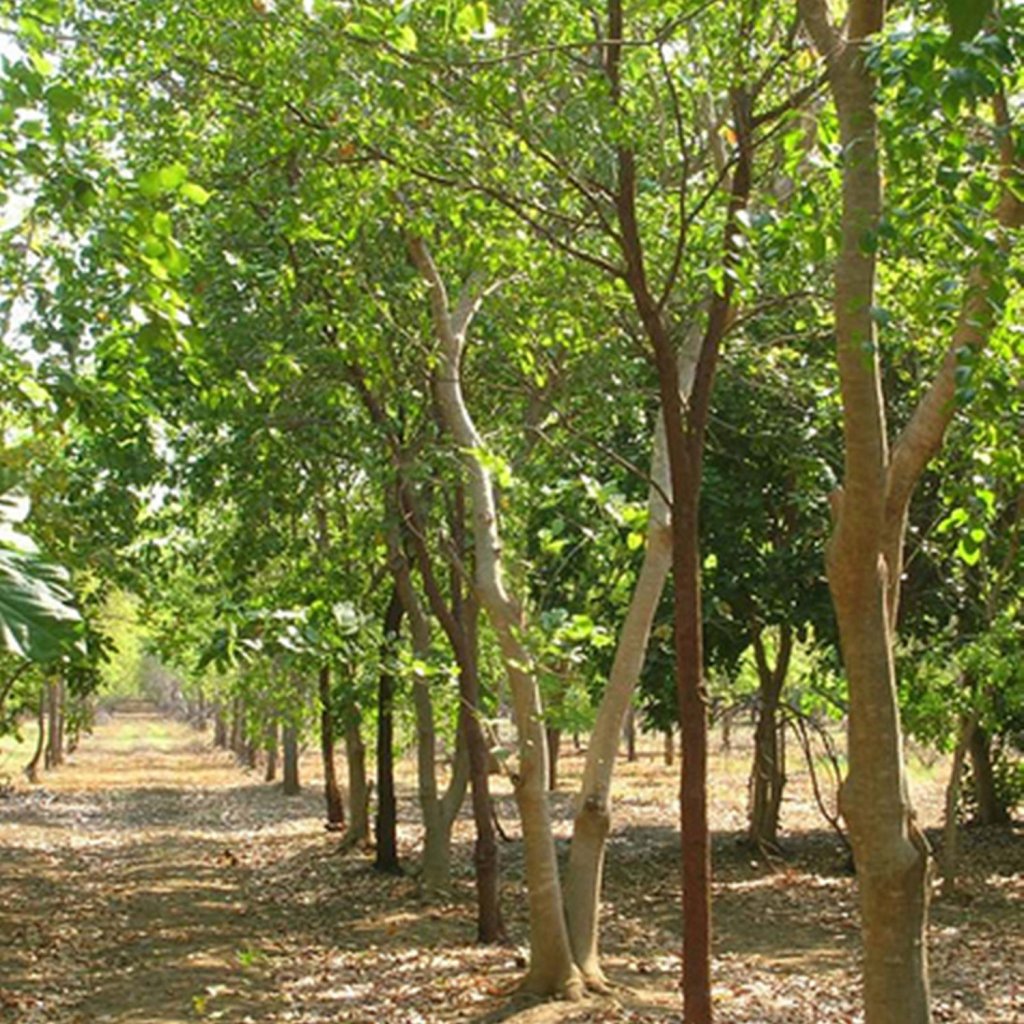
Although forestry has often been associated with plantations of non-native species, a number of talks focussed on trialling and utilising native species in new forestry and forest products, including eucalyptus and acacia in Australia, bamboo and rattan in China and Southeast Asia, teak in Southeast Asia, aloe in Kenya and several candidate species in India. An interesting new product being trialled is Cape York Sandalwood (David Lee)
Improvements in tree selection and product manufacturing
The conference also promoted the latest developments in tree breeding and product manufacturing to support the key commercial and production opportunities for the sector. We saw a plenary and session on Massive Timber and other sessions on In-forest Wood Quality Assessment, Chemistry and Plantation Improvements. An interesting area of development was in Biorefineries for Bio-based Products.
Summary
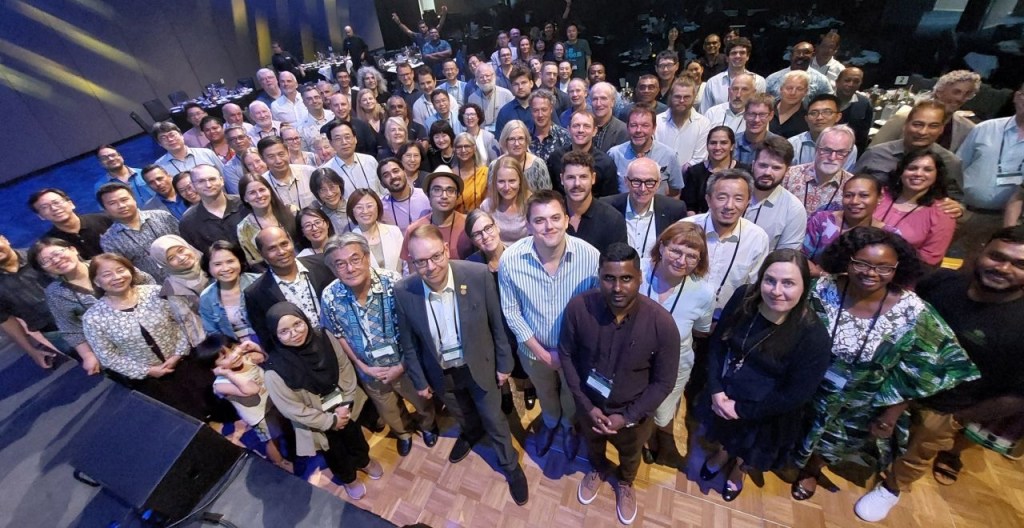
The conference on the north-east coast of Australia in tropical Cairns was the first major event of the total of 16 Units of Division 5 after the Corona-related break in presence. A total of 140 representatives from the field of forestry and wood sciences from a wide range of cultures from 26 countries attended the event.
In summary, this conference was a truely global group that came together from many nations to focus on forest protection and the sustainable utilisation of forest products for future generations.
Article Authors: Andrew Lowe, Victor Deklerck and Volker Haag
Featured image – Logo from the conference
 Prof Andy Lowe
Leave a comment