Roof top gardens aren’t just a quasi hipster architect’s dream concept, but really help insulate and cool buildings, capture rainwater and provide locally sourced food. Scientists are now extending their uses to help conserve endangered plant species.
Shifting restoration’s mindset away from the ‘Garden of Eden’
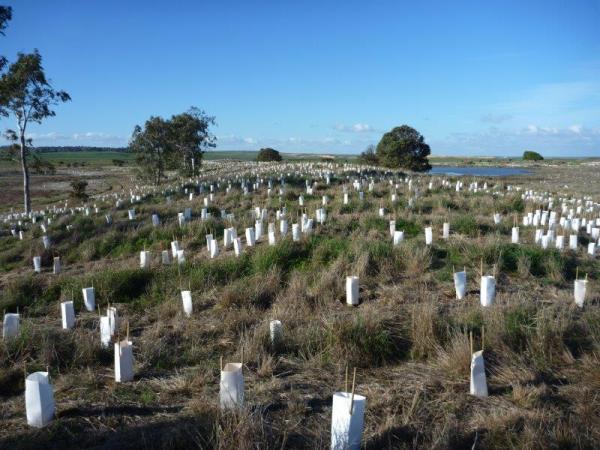
There has been a recent recommendation to set restoration baselines as pre-degradation ecological communities. However this is a nostalgic aspiration, akin to restoring the ‘Garden of Eden’. It is unrealistic, expensive and does not acknowledge ecosystem change. Restoration should respond to the current drivers of biodiversity loss by addressing declines in ecosystem function and provisioning of ecosystem services.
Continue reading “Shifting restoration’s mindset away from the ‘Garden of Eden’”
Local is not always best
The use of local seed is widely advocated for habitat restoration and is based on the premise that locally sourced seed will be the best adapted for the local conditions at restoration sites.
However, a ‘local is best’ seed sourcing practise (where seed for planting establishment is only sourced from native habitat within a few km of the restoration site) misses two important points, which may be seriously impacting on restoration outcomes, particularly resilience in the face of future environmental and climate change.
DNA’s role in timber tracking
In this public lecture, Prof Andy Lowe speaks about the use of DNA to potentially solve conservation problems, particularly with regards to timber tracking.
Fourth International Barcode of Life Conference
Prof Andy Lowe celebrates the success of the Fourth International Barcord of Life Conference in 2011, and the implementation of barcoding technologies across industries in Australia.
Continue reading “Fourth International Barcode of Life Conference”
TEDxAdelaide – DNA Barcoding for Biodiversity
Biodiversity and ecosystems provide us with clean air, water, and access to food.
However we don’t really know much about the basic building blocks of biodiversity.
How many species are there on earth? 10 million? What does this mean for humans? Over 250 years we’ve probably found and named approximately 1 million species, approx 10% of the biodiversity on earth.
At the same time the rate of intinction is increasing.
We’re going to need some help.
Continue reading “TEDxAdelaide – DNA Barcoding for Biodiversity”
Following trend
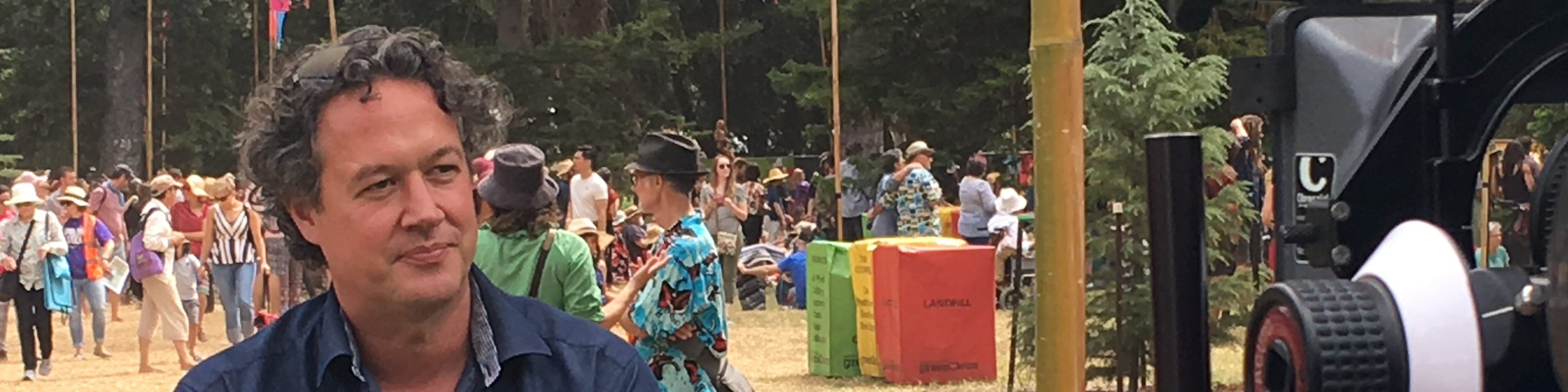
Prof Andy Lowe officially launches Trend at the 2011 WOMAD Earth Station Festival.
Biodiversity corridors
The Environment Institute talks to Professor Andy Lowe, Director of the Australian Centre for Evolutionary Biology, the University of Adelaide.
Prof Lowe gives an overview of how biodiversity corridors can help ease species strain due to fragmented native habitats.