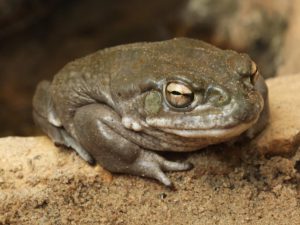
There is increasing interest in owning wild and exotic animals and the internet is able to serve up whatever your heart desires, even if importing these animals is illegal.
Continue reading “Exotic plants and animals: the illegal wildlife trade happening right under your nose”Nature deprivation: the real consequences
Are you getting the best microbes on offer? What are microbes anyway and why should we care?
If you’ve ever heard of the term “microbiome” you probably relate it to gut health, but there’s so much more to it! It’s all around us, and in us, and affects our brains, immune systems, stress levels, and psychological state.
Join us for this podcast episode where we speak with Dr Jess Stanhope and Prof Phil Weinstein about how public health is effected by urban environments and the promising future for disease prevention and treatment in the reversal of global urban nature deprivation.
Continue reading “Nature deprivation: the real consequences”Under the surface: shedding light on ‘ocean blindness’
What happened when the head of Engineering for Google Australia and the Professor and author behind Australia’s first ever textbook on Marine Ecology came together? Nothing short of the miraculous bringing back to life of an extinct ecosystem in the waters of Australia’s biodiverse southern coastline.
And what’s next on the sparkly horizon?

Water: too much, too little, too dirty
Water is finally back on the global table after 46 years of not being discussed at a global scale conference. Conservation, salinity, pricing, agriculture, cultural use – the list goes on. Is the subject of water rights at risk of getting lost in an endless talk fest? Where do we start when trying to come up with solutions to the many water issues we face on a local and global scale? What even are ‘water rights’?
In this podcast episode host Prof Andy Lowe Interim Director of the Environment Institute University of Adelaide, speaks with Assoc Prof Peter Burdon and Prof Sarah Wheeler, both from the University of Adelaide. Sarah is a water economist from the School of Economics and Public Policy, and Peter is an expert in environmental law from the Adelaide Law School.
Continue reading “Water: too much, too little, too dirty”Markets for nature. What’s the currency of biodiversity?
Nature is threatened, but it is also messy and complex. Ecologist try to untangle the mess of conservation, governments and industry. Small landowners are trying to help too. How do we work to save life on Earth?
How do we get the scale of investment required to restore our degraded land? Can we create markets for nature? Where does the money come from? And who are the buyers?
In this episode host Prof Andy Lowe Interim Director of the Environment Institute University of Adelaide, speaks with renowned ecologist Prof Hugh Possingham about the need to set aside 30% of every different kind of habitat for conservation in order to sustain the health of our global biodiversity and to establish biodiversity markets to drive these outcomes.
Continue reading “Markets for nature. What’s the currency of biodiversity?”Music – a solution to climate change?
When we discuss ‘Climate Change Solutions’ or ‘Saving the Environment’ we may think of advances in technology, new scientific discoveries or powerful policy changes.
But the truth is, our relationship with our planet today relies on more than just science and technology – it relies on the humanities, the arts, musicians, performers, activists and a whole range of players to make it happen.
Continue reading “Music – a solution to climate change?”Reversing the great global bee decline
Bees mean honey right?
Well yes and no.
Yes, we have exploited and managed bees for their delicious byproduct for millennia. Besides a great tasting and relatively healthy sweetener, honey and bees are used for other purposes.
The Federated States of Degradia
With almost a third of arable land classified as degraded, what can we do to reverse the rapid pace of degradation and can we do it in a way that benefits us?
Bioactive prospecting
Biosprospecting is the process of discovering and commercialising new products derived from nature. The process of discovery often uses indigenous or traditional knowledge, but has, more often than not, been more of a scatter gun approach to surveying and testing the bioactivity of a range of products from all plants and animals in a region.
Innovation for food
Over the last few years, food production and processing have been embarking on the biggest change since the industrial revolution. Novel approaches that exploit robotics, machine learning, computer vision, epi-genetics and gene editing technologies are being used to improve the efficiency and cost-effectiveness of food production.