Food waste is a big global issue

The United Nations Food and Agriculture Organisation (FAO) has estimated that a third of all food produced globally is wasted, that’s 1.3B tonnes.

To put that in context, the Great Pyramid at Giza weighs about 5 million tonnes. If that were food waste it would weigh about 1.4 million tonnes (because food is less dense than stone), so the amount of food waste produced globally is equivalent to just less than 1000 Great Pyramids of Giza.

That’s a lot of food.

Continue reading “Food waste is a big global issue”

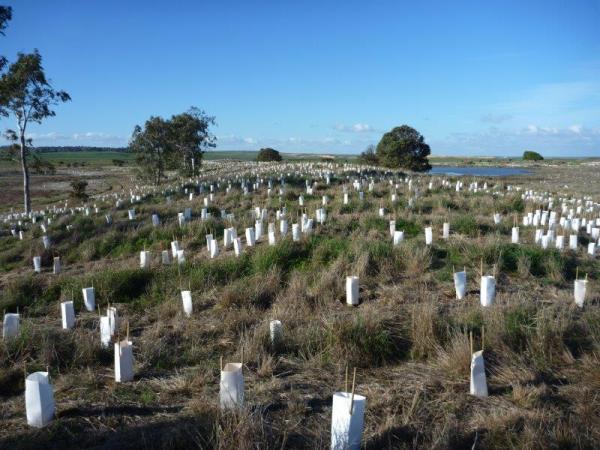
Shifting restoration’s mindset away from the ‘Garden of Eden’

There has been a recent recommendation to set restoration baselines as pre-degradation ecological communities. However this is a nostalgic aspiration, akin to restoring the ‘Garden of Eden’. It is unrealistic, expensive and does not acknowledge ecosystem change. Restoration should respond to the current drivers of biodiversity loss by addressing declines in ecosystem function and provisioning of ecosystem services.

Continue reading “Shifting restoration’s mindset away from the ‘Garden of Eden’”

Local is not always best

The use of local seed is widely advocated for habitat restoration and is based on the premise that locally sourced seed will be the best adapted for the local conditions at restoration sites.

However, a ‘local is best’ seed sourcing practise (where seed for planting establishment is only sourced from native habitat within a few km of the restoration site) misses two important points, which may be seriously impacting on restoration outcomes, particularly resilience in the face of future environmental and climate change.

Continue reading “Local is not always best”

Create a website or blog at WordPress.com

Up ↑